Series
Umi Vla Series
The "Umi Vla Series" series has 7 parts — read them in order from part 1.
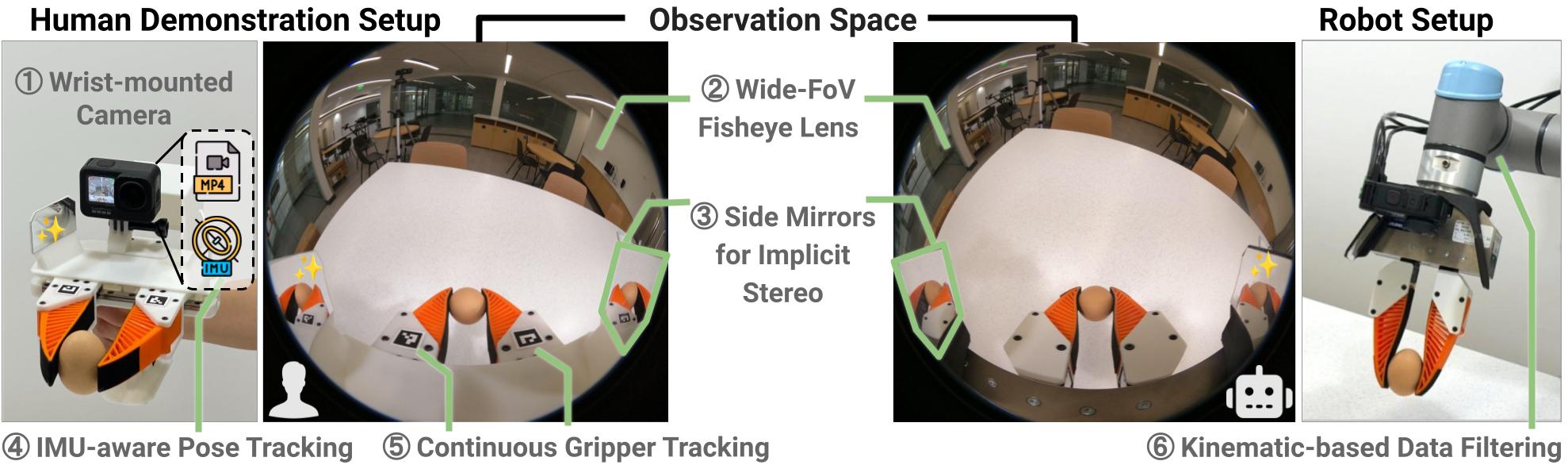
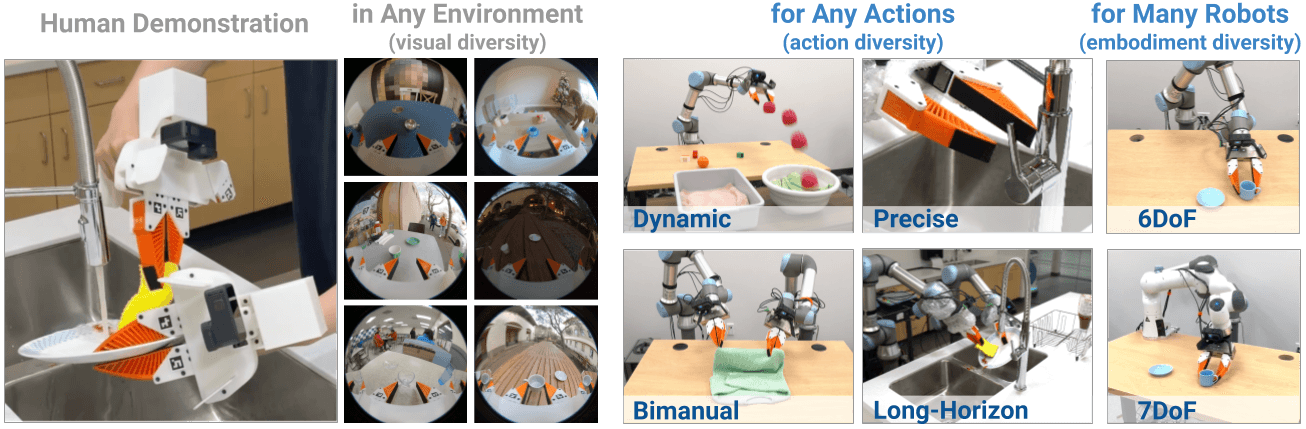
ManipulationWhat is UMI? How to collect VLA robot data without teleop
Understand the core idea behind Universal Manipulation Interface: why decoupling data collection from the robot is the key breakthrough for scaling imitation learning in manipulation.

Build your first UMI gripper: 3D printing, assembly, and GoPro smoke test
Step-by-step guide to 3D printing and assembling a UMI handheld unit with GoPro — the verified path from the Stanford repo. Full BOM, print settings, and how to test before collecting your first demo.

Collect single-arm UMI demos and run the official SLAM pipeline
Step-by-step guide to recording UMI single-arm demos, running all 8 official SLAM pipeline scripts (00–07), checking data quality, and exporting replay_buffer.zarr.zip for policy training.

Train your first UMI Diffusion Policy and test on a real robot arm
Train Diffusion Policy from UMI's replay_buffer.zarr.zip, understand training metrics, and deploy the policy to a real robot arm using eval_real_umi.py — with verified official configs.

Go bimanual: UMI two-arm pipeline with official scripts
Scale UMI to bimanual: build 2 units, record two-arm demos, use the official demo_real_bimanual_robots.py and eval_real_bimanual_umi.py, train with umi_bimanual config. Concrete, step-by-step, no guesswork.
Upgrading to D405: when to replace GoPro in UMI and how
Practical guide for deciding when to upgrade from GoPro UMI to RealSense D405: what D405 brings, what you must build yourself, and the right architecture to avoid losing data quality.

Whole-body VLA: combining UMI + mocap/VR for full-body humanoid data
Architecture and design principles for extending UMI from upper-body manipulation to whole-body humanoid data collection by combining it with mocap or VR teleop — practical analysis from HumanPlus, OmniH2O, and Open-TeleVision.