All posts
Page 5 of 18

UniTacVLA integrates tactile chain-of-thought reasoning and coarse-to-fine prediction into VLA for contact-rich manipulation — ECCV 2026 with open-source code.

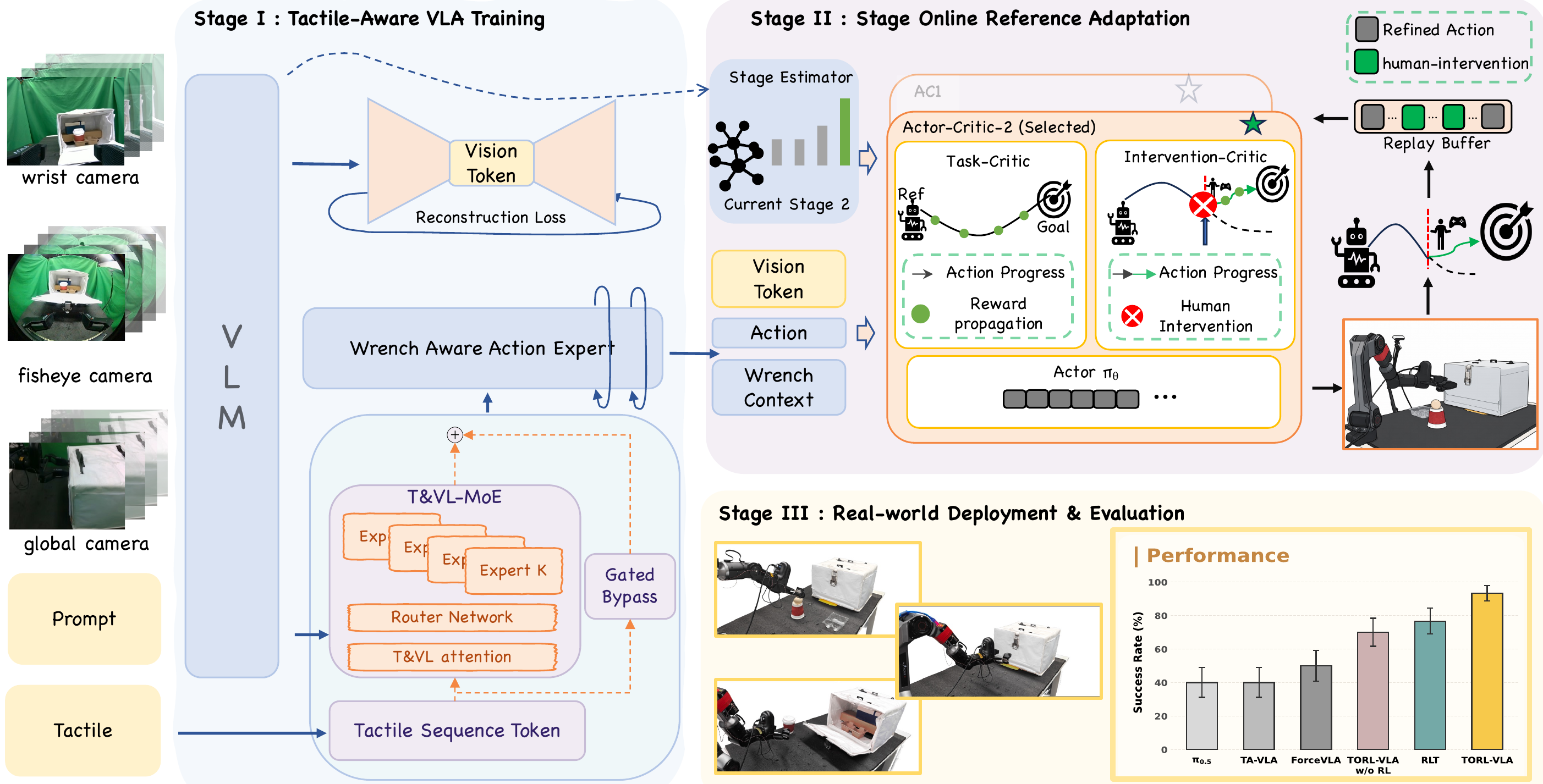
A technical guide to TORL-VLA — a framework combining tactile sensors and Online RL to fine-tune VLA models for high-precision contact-rich manipulation: latch,

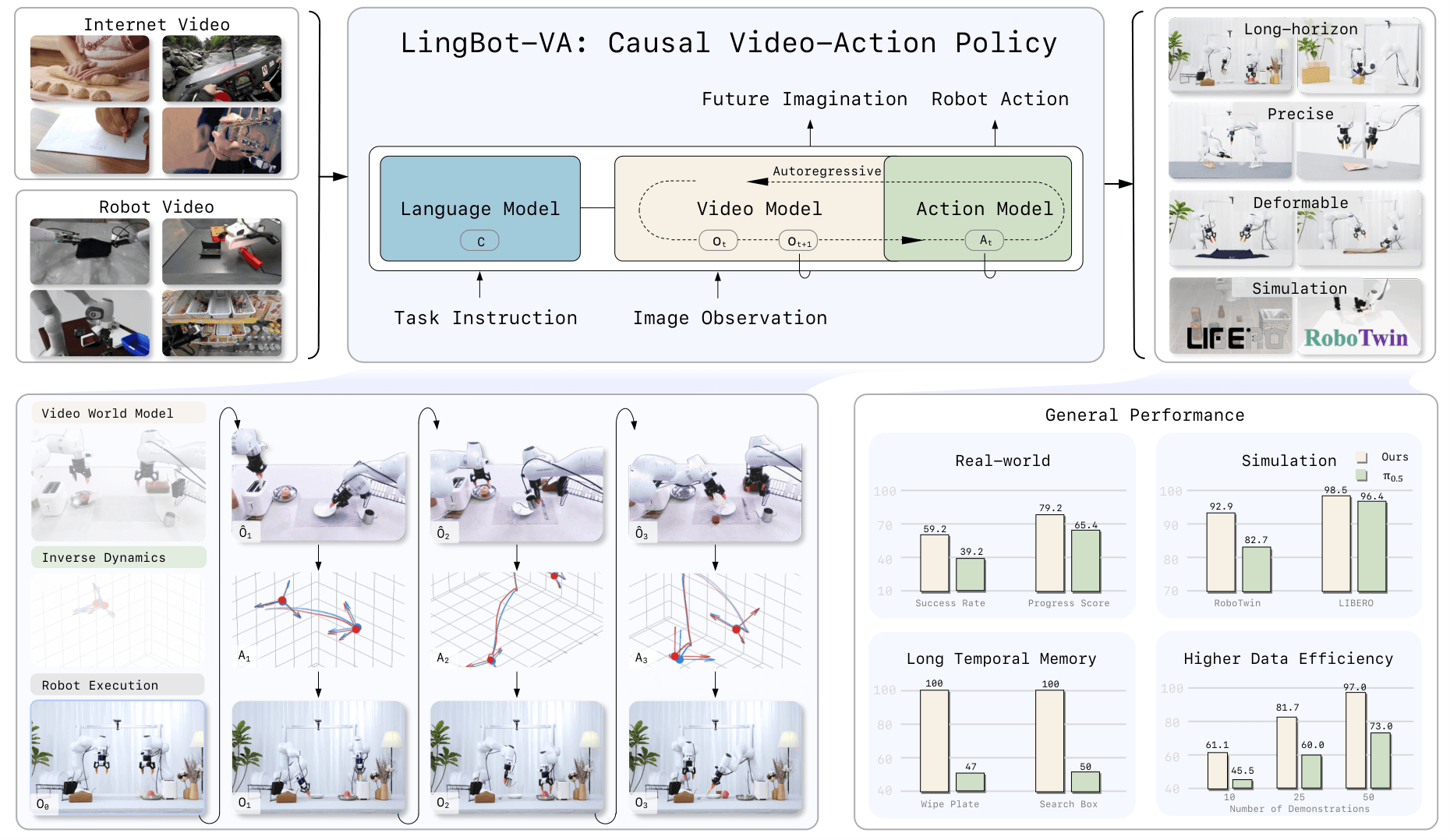
MoT architecture unifying video prediction and robot policy in a shared causal latent space — 98.5% on LIBERO, beats π0.5 across all 6 real-world tasks.

FORCE fixes two VLA RL failures — unstable Q-function, weak exploration — via Value-Calibrated Warm-Up and Self-Distillation, 79% absolute improvement.
InternVLA-A1 unifies semantic understanding, visual foresight, action execution in one Mixture-of-Transformers arch — beating π0.5 by +26.7% on dynamic tasks.

TGRPO combines LLM-generated dense rewards with dual-level advantage estimation (step + trajectory) to fine-tune OpenVLA-7B on LIBERO, reaching 91% success rate
Deep dive into Qwen-VLA — Alibaba's unified VLA using Qwen3.5-4B + DiT decoder, one set of weights for manipulation, navigation, and heterogeneous robots.

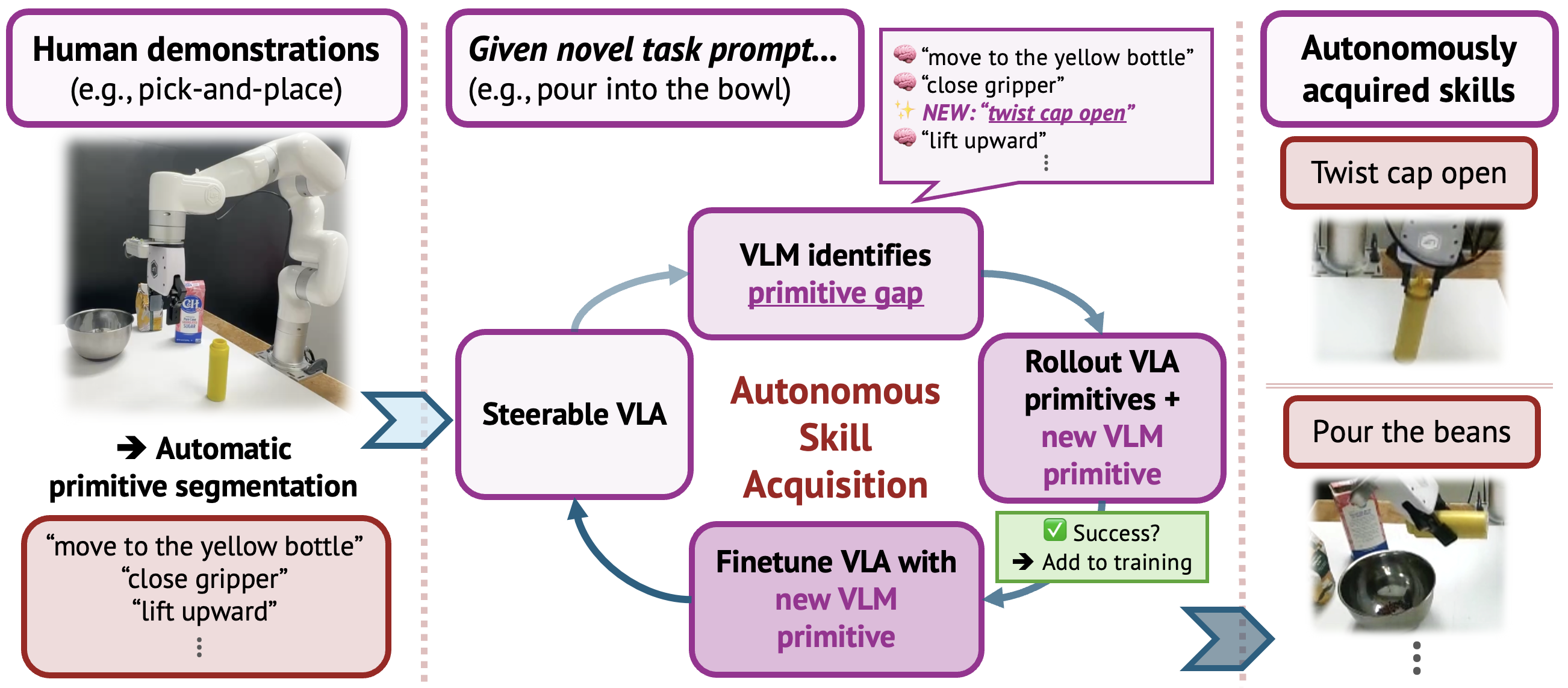
Stanford's InSight lets VLAs acquire new manipulation skills autonomously by decomposing primitives, spotting skill gaps, and running a VLM-guided flywheel.

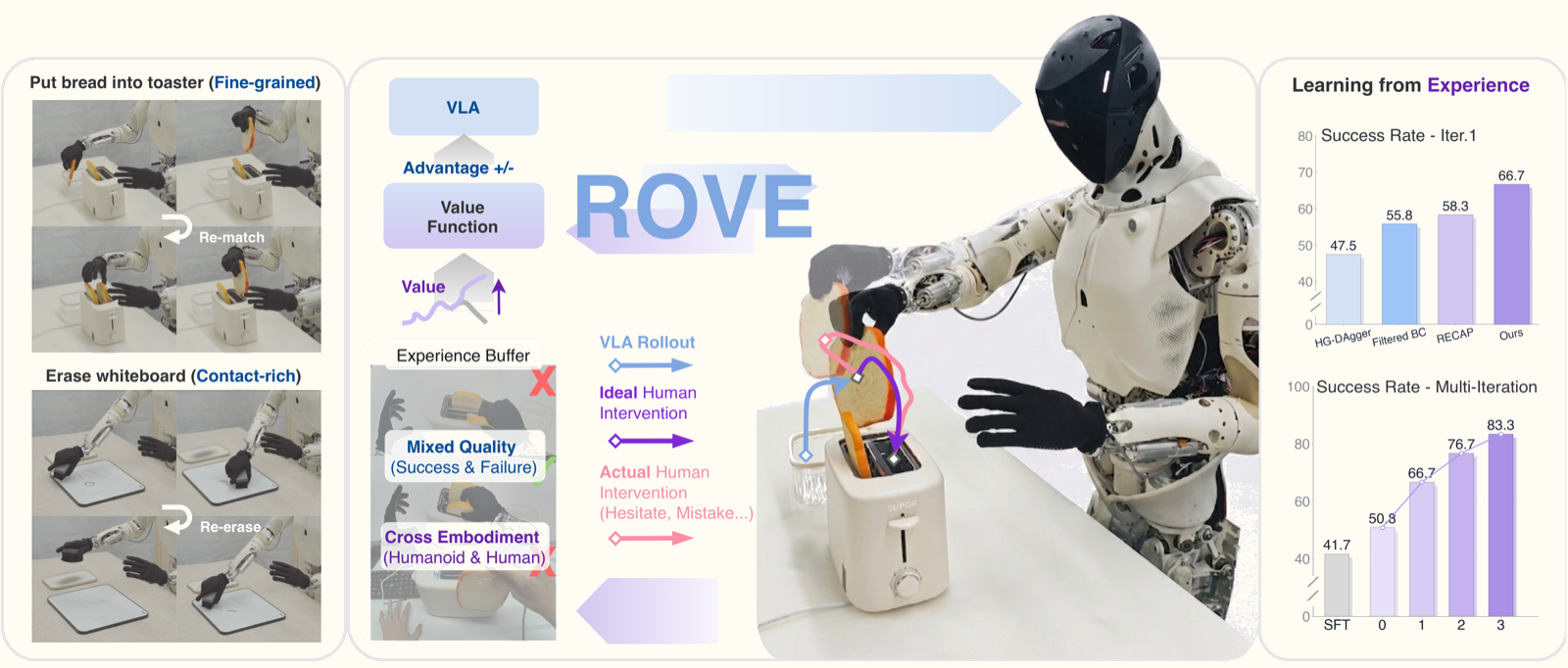
XPENG Robotics introduces ROVE — a post-training RL framework that leverages imperfect human interventions to improve dexterous humanoid manipulation policies.

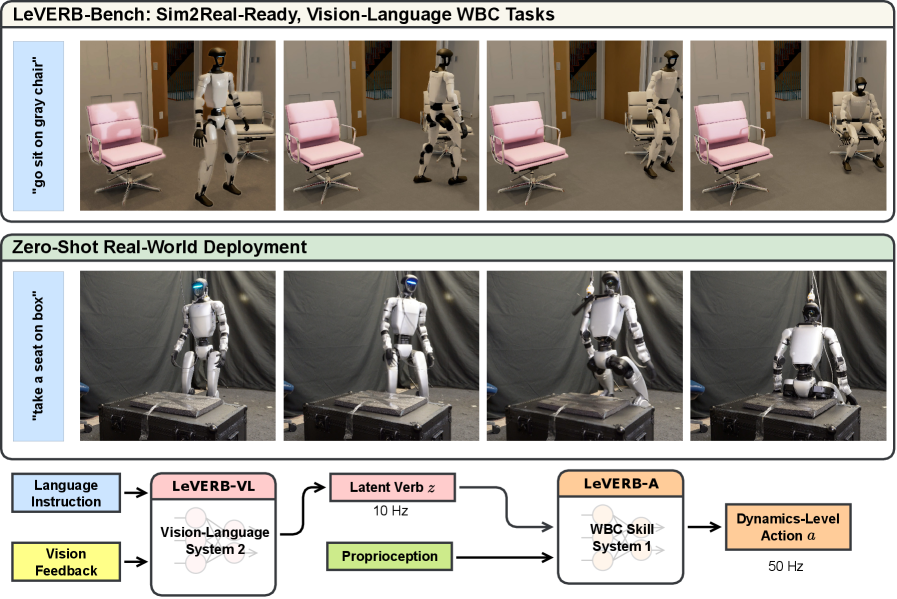
UC Berkeley's LeVERB is the first framework bridging VLA with humanoid Whole-Body Control via a latent action space — 58.5% success, zero-shot sim-to-real.

LeVERB (UC Berkeley): the first hierarchical framework bridging VLA and humanoid WBC via a latent verb space — 58.5% success, zero-shot sim-to-real.

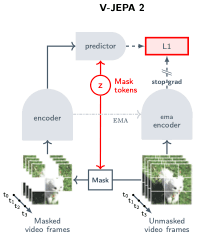
VLA-JEPA combines Qwen3-VL with V-JEPA2 latent world model, runs at 10Hz on RTX 3080, fine-tuned with only 13 demos. Full guide for installation and training on